1. In the process of the global energy transition, the role of national oil and gas corporations is undergoing profound changes. No longer limited to resource extraction and supply, these enterprises are increasingly becoming central to organizing the energy-industrial ecosystem, playing a coordinating and leading role in development. In Vietnam, this orientation is clearly demonstrated with Petrovietnam being established as the National Energy and Industry Corporation of Vietnam, with the mission not only to ensure energy security but also to participate in creating a new energy structure.
 Petrovietnam is gradually developing large-scale and highly integrated industrial and energy centers.
Petrovietnam's shift is closely tied to the macroeconomic context and strategic requirements of the nation. While energy demand continues to increase rapidly to serve economic growth, traditional resources are increasingly depleted, extraction costs are rising, and the pressure for a green transition is becoming more apparent. This forces energy corporations to shift from a "recruitment-consumption" model to an "integration-optimization-transition" model, in which they not only supply energy but also participate in shaping how energy is produced, distributed, and used throughout the economy.
In reality, Petrovietnam already possesses the crucial foundations for this transformation. With a relatively complete value chain, spanning from exploration, extraction, transportation, processing to distribution and technical services, the Group is not only an energy producer but also a key link connecting important components of the national energy system. Its large scale of operations, significant contributions to the state budget, and role in stabilizing the market during periods of volatility have helped Petrovietnam gradually affirm its position as a "pillar" of the national economy.
From an expert's perspective, Petrovietnam's transformation is a strategic step. Associate Professor Ngo Tri Long believes that Petrovietnam has been playing a "backbone" role in ensuring national energy security, and expanding into an integrated energy group model is an inevitable requirement in the new context. As energy demand increases while traditional resources gradually decline, a development model based on a closed value chain and diversified energy sources becomes a prerequisite for maintaining stability and growth.
From another perspective, lawyer Nguyen Tien Lap emphasized that Petrovietnam needs to move beyond its role as a mere exploration enterprise to become a true "energy hub"—a place that not only produces but also participates in planning, coordinating, and leading the industry's development policies. This is especially important in the context of the energy transition, where investment decisions are not only based on economic efficiency but also linked to energy security, emission reduction, and sustainable development goals.
Within this overall context, Petrovietnam's role is shifting from "producer" to "ecosystem builder." Beyond operating energy projects, the Group also plays a connecting role across related industries, from petrochemicals, electricity, and gas to technical services, logistics, and technology. When these chains are integrated and operated synchronously, Petrovietnam not only creates direct value but also spreads development momentum to many other sectors of the economy.
2. In reality, the formation of industrial-energy centers in Vietnam did not happen overnight, but is the result of a long-term accumulation process, linked to Petrovietnam's value chain development strategy. From initial isolated projects, oil and gas industrial complexes have gradually been connected, expanded, and integrated, forming "industrial-energy hubs" with increasingly larger scale and widespread influence.
Areas like Dung Quat, Nghi Son, Ca Mau , and Nhon Trach are prime examples of this transformation. On the surface, these are oil refining, gas-fired power, or fertilizer production projects. But at a deeper level, they are energy economic spaces where multiple layers of infrastructure and value chains are integrated – from exploration, transportation, and processing to electricity production, chemicals, and technical services. This integration creates a synergistic effect, optimizing resources and improving overall efficiency.
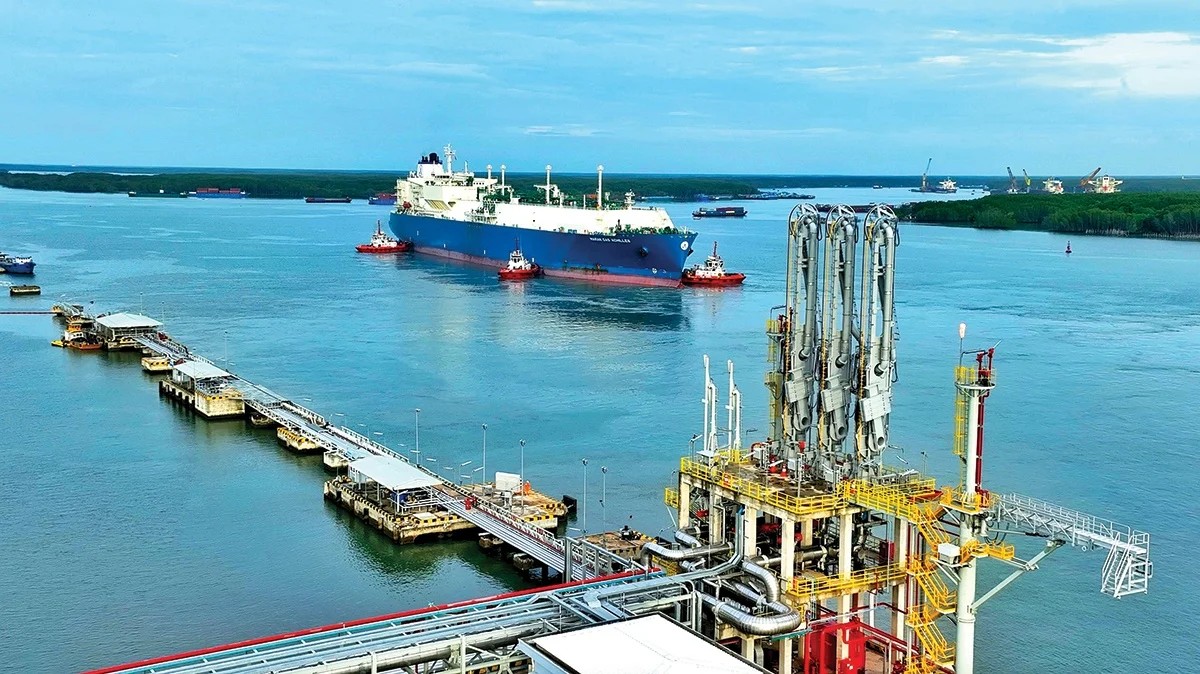 Thi Vai Port
The core of this model lies in its ability to “maintain value within the chain.” Instead of exporting raw resources or relying on external links, Petrovietnam is gradually building closed-loop complexes where the input of one stage becomes the output of another. The Ca Mau gas-electricity-fertilizer complex is a clear example: natural gas is not only extracted but also converted into electricity and chemical products, thereby increasing value and minimizing resource waste. Similarly, refining and chemical complexes meet domestic fuel needs while creating a foundation for the development of supporting industries and logistics services.
From an expert's perspective, these "energy industrial hubs" are not only production infrastructure but also drivers of regional development. Many believe that the formation of an energy center leads to the synchronized development of transportation, logistics, urban areas, and related industries, thereby creating new economic spaces. This explains why areas with large energy projects often become attractive investment destinations and experience higher growth rates than the average.
However, the biggest difference between the current period and the past lies in the expansion into new energy sectors. Energy-industrial centers are no longer limited to traditional oil and gas, but are integrating LNG, gas-fired power, renewable energy, hydrogen, and emission reduction technologies. This is a crucial shift, enabling Petrovietnam not only to maintain its role in the current energy system but also to participate in shaping the future energy structure.
From another perspective, this process also reflects a shift in development thinking. While previously the goal was to build large-scale projects, now the focus is on building interconnected and interconnected systems. A factory or industrial complex, no matter how large, only creates limited value if it stands alone. But when placed within an interconnected network, it can become a crucial "node" in the ecosystem, contributing to value beyond its own scope.
It is evident that Petrovietnam's process of forming industrial and energy centers is shifting from a "point development" logic to a "systemic development" logic. This shift lays the foundation for these energy hubs to not only play a production role but also become a driving force for the dissemination, connection, and leadership of economic and industrial development at the regional and national levels.
3. Although industrial-energy hubs have gradually formed, the biggest challenge in transforming them into true "industrial-energy centers" lies not in further expanding investment, but in the ability to integrate and operate the entire system as a unified whole. This is a fundamental shift, from extensive to intensive development, from "having many projects" to "having a synchronized operating ecosystem."
In reality, many large industrial clusters still exist as relatively independent "islands," lacking strong connections in infrastructure, data, and supply chains. This leads to localized optimization but fails to create overall efficiency. A true energy center must overcome this limitation, forming multi-dimensional links between extraction, processing, consumption, and services, while also connecting with other economic sectors to create spillover value. In this scenario, each project would not only serve its own purpose but become a link in the overall development structure.
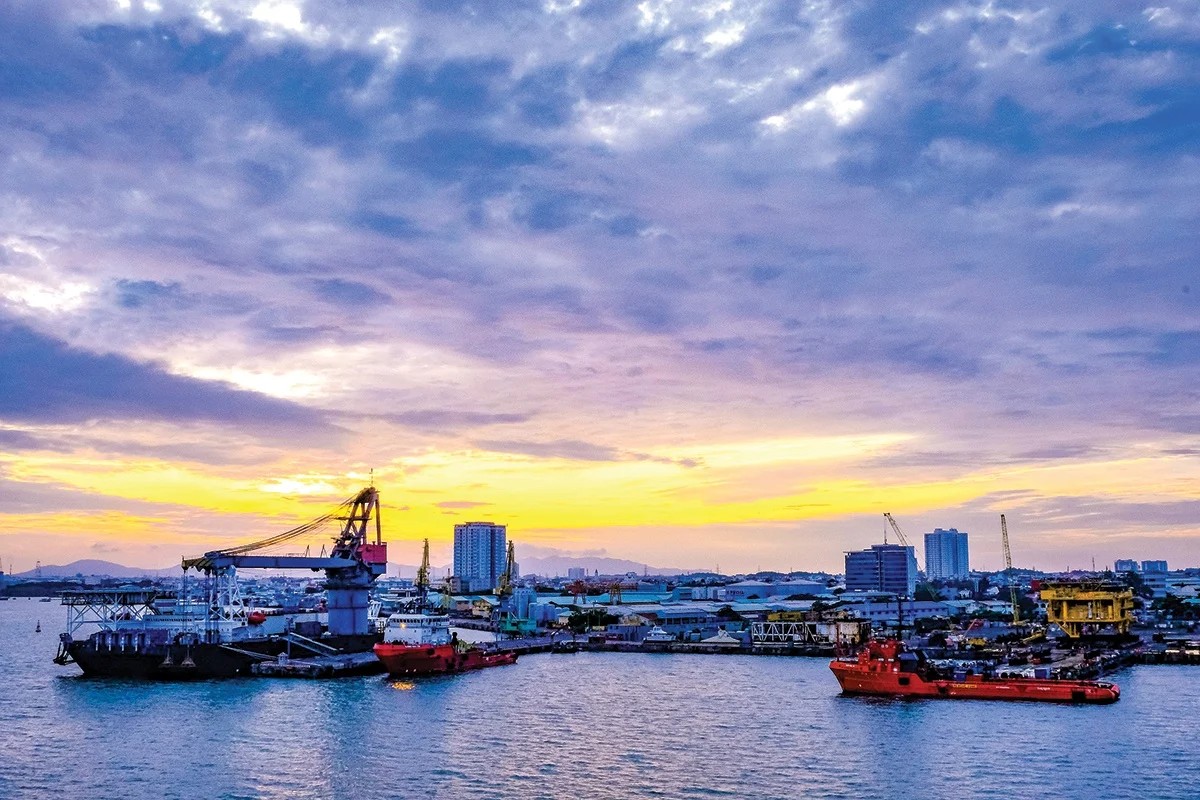 Cai Mep - Thi Vai is expected to become one of the national industrial and energy centers.
From an expert's perspective, the prerequisite for forming an industrial-energy center is not just infrastructure, but integrated capacity. Many economists believe that the greatest value of modern energy centers lies in their ability to coordinate resources and optimize the value chain on a large scale. This requires a sufficiently strong governance system capable of connecting units, synchronizing strategies, and allocating resources according to common goals, rather than allowing each unit to operate according to its own interests.
In this respect, Petrovietnam's role is no longer limited to that of an investor or operator, but is shifting to that of a "conductor" of the energy ecosystem. Lawyer Nguyen Tien Lap once emphasized that Petrovietnam could become an "energy hub" in a broad sense, not only organizing production but also participating in shaping policy and guiding the industry's development. This is especially important in the context of the energy transition, where investment decisions need to be considered based on multiple criteria: economic efficiency, energy security, emission reduction, and long-term sustainability.
Another crucial factor is the institutional framework and policy mechanisms. Industrial and energy centers can only fully realize their potential when placed within a sufficiently flexible institutional framework that allows for the experimentation of new models, the mobilization of social resources, and the acceptance of controlled risks. According to many experts, specific mechanisms are needed for leading companies like Petrovietnam, ranging from investment and financial autonomy to mechanisms for evaluating effectiveness based on spillover effects, rather than focusing solely on short-term profits.
Looking at the long term, the transition from an "industrial cluster" to an "energy center" is essentially an upgrade of Petrovietnam's role in the economy. Previously, the Group primarily generated value through production and exploitation; in this new phase, value will come from its ability to organize, connect, and lead the entire energy-industrial ecosystem. At that point, Petrovietnam will not only be a large enterprise but will become a special economic institution, playing a key role in shaping the development structure of the energy sector and contributing to the nation's sustainable growth.
This is arguably the most difficult but also the most important transition: from "large-scale" development to "structured" development, from "project-based" development to "ecosystem building". If successful, Petrovietnam will not only build industrial and energy centers but also establish a new development model for Vietnam's energy economy in this era of transformation.
Petrovietnam's process of forming industrial and energy centers is shifting from "point development" to "system development". This shift creates a foundation for energy hubs to become drivers, connecting and leading economic and industrial development at the regional and national levels.
According to Petrotimes
Source: https://www.ptsc.com.vn/tin-tuc/tin-dau-khi-1/tin-petrovietnam/petrovietnam-va-qua-trinh-hinh-thanh-trung-tam-cong-nghiep-nang-luong