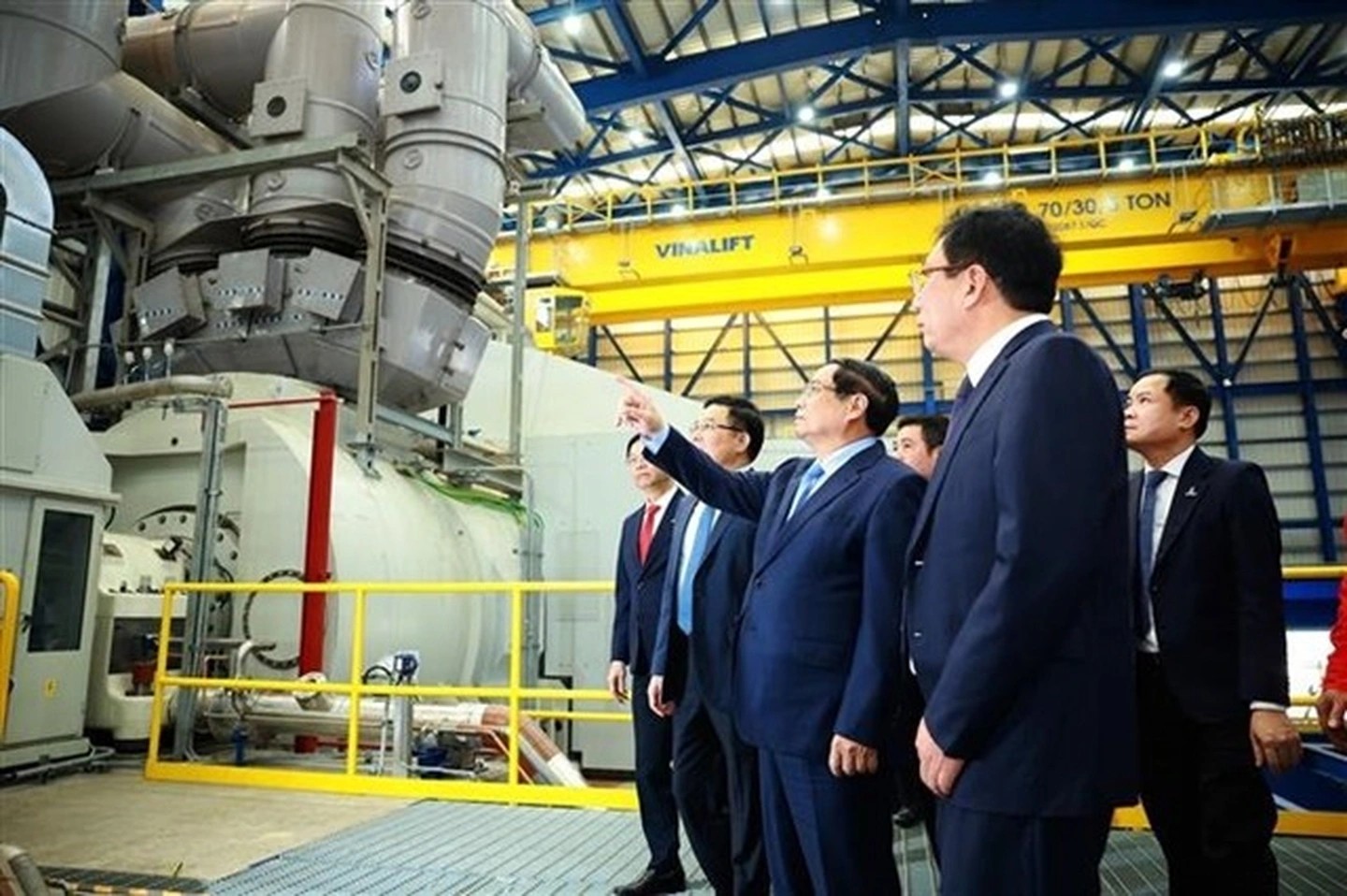
 Prime Minister Pham Minh Chinh tours the plant's operations. VNA/VNS Photo Duong Giang
Vietnam has opened its first liquefied natural gas power plants, the twin Nhon Trach 3 and Nhon Trach 4 facilities in Dong Nai Province, at a cost of USD1.4 billion. Built by state energy giant Petrovietnam, the plants will generate more than nine billion kilowatt-hours annually with a combined capacity of 1 624 megawatts to support grid stability as renewable energy increases in the southern region.
The facilities aim to help meet Vietnams surging electricity demand, which requires capacity additions of 6 500 to 8 200 MW annually amid peak consumption of about 54 500 MW. Growth in demand is driven by the countrys expansion in high-tech manufacturing, semiconductor production, data centres and high-speed rail infrastructure.
“These plants are a crucial piece in strengthening national energy security and meeting the countrys fast and sustainable development requirements,” Chinh said at the inauguration ceremony. He described the project as exemplary in overcoming obstacles while maintaining quality, safety and environmental standards.
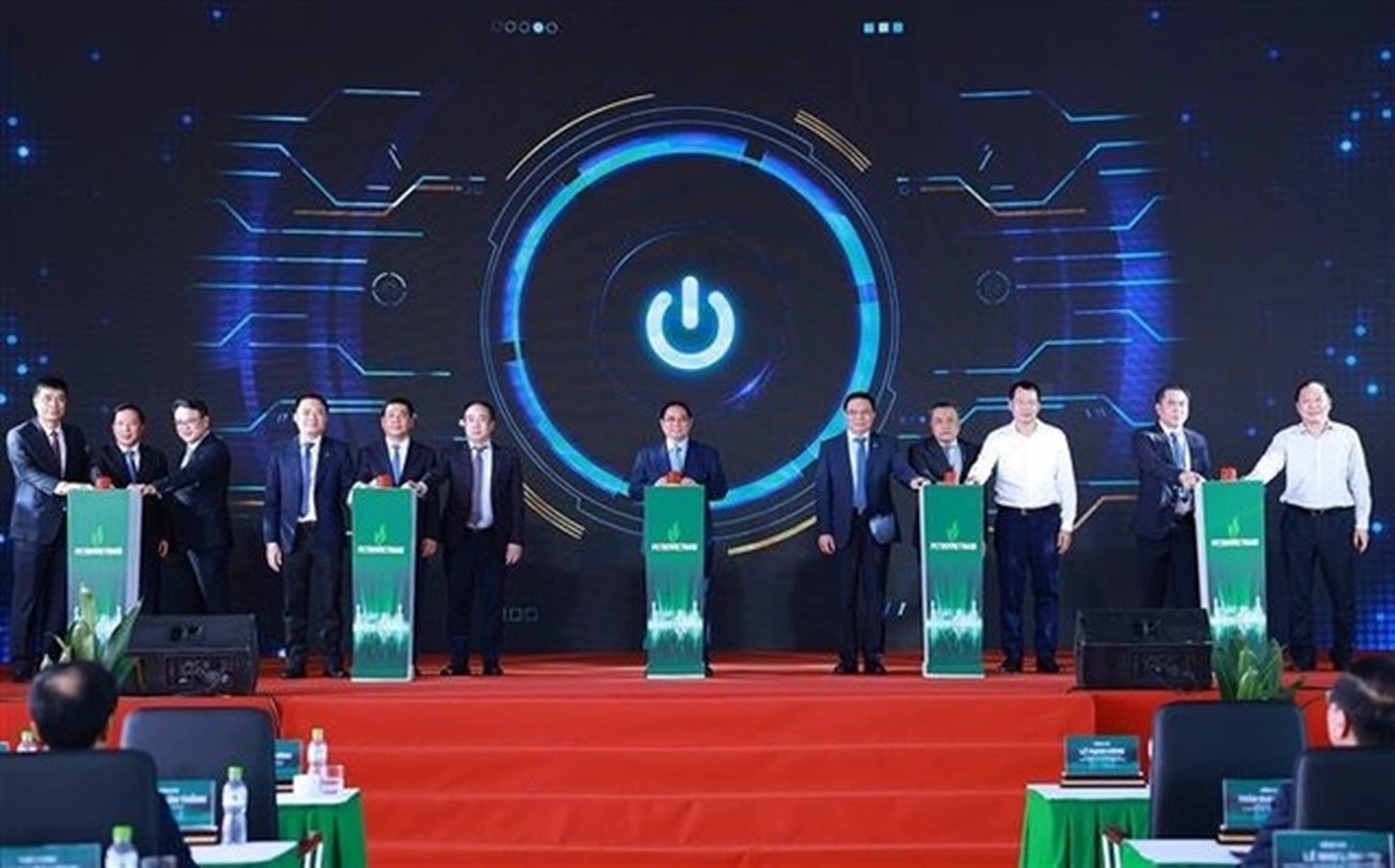 Prime Minister Pham Minh Chinh and delegates press the button to inaugurate the Nhon Trach 3 and 4 LNG power plants. VNA/VNS Photo Duong Giang
The plants use GE 9HA.02 gas turbines, among the worlds most advanced in capacity and efficiency. The technology achieves 62 to 64 per cent efficiency and can blend up to 50 per cent hydrogen, with potential for 100 per cent hydrogen use in the future.
LNG-fired electricity generation reduces carbon emissions by roughly 40 per cent compared with coal and 30 per cent compared with oil, supporting Vietnams pledge to achieve net zero emissions by 2050.
Construction began in May 2022 during the COVID-19 pandemic without government guarantees, requiring financing from international institutions under strict standards. Incomplete regulatory frameworks for LNG pricing and long-term power purchase agreements, land acquisition and equipment logistics added to challenges.
Petrovietnam and main contractor Lilama-Samsung C&T worked round the clock to complete construction on schedule. The EPC contractor selection took just 11 months, among the fastest for a project of this scale. Domestic contractor Lilama accounted for about 40 per cent of the EPC work, the highest participation rate for a thermal power plant in Vietnam.
The facilities will primarily serve southern Vietnam, the countrys economic engine and a key destination for high-tech foreign investment. They are expected to help establish a gas-fired power market and provide a template for 13 additional LNG projects outlined in the national power development plan.
Chinh emphasised that stable energy infrastructure is fundamental to rapid economic development, noting that countries with fast, sustainable growth possess robust, modern energy systems.
Petrovietnam chairman Le Manh Hung said the projects success lays the foundation for developing LNG power centres nationwide to ensure energy security and support the countrys net zero target.
The Politburo issued Resolution 70 in August on national energy security through 2030, with a vision to 2045, prioritising energy development to support more than 10 per cent annual growth with state-owned enterprises in lead roles and the private sector as a key driver.
Chinh said the projects success offers lessons for future energy initiatives, emphasising unity, practical problem-solving and inter-agency coordination, balancing domestic and international resources and clear accountability with measurable results.
He pledged continued support for energy infrastructure projects, including streamlined regulations and improved investment conditions for the LNG supply chain.
Source: VNS